

With Economy still being Achilles’ heel, is Pakistan striving to punch above its weight in the realm of Foreign Policy?

Rising Tides: How India-Pakistan Peace Can Lift Up 1.5 Billion People
India and Pakistan are two neighboring countries with a history and past full of tense relations. Both countries have been locked in bitter geopolitical struggles. The long-standing animosity and hostility have resulted in multiple conflicts and disputes, hindering progress and development. However, if the two states make peace with each other, then their benefits and advantages will be multifaceted and far-reaching. From economic prosperity and human development to joint action against social evils, the potential gains are immense. One of the central pillars of peaceful coexistence between India and Pakistan is the potential for robust economic collaboration and expanded trade ties. Likewise, the advent of peaceful relations could serve as a bulwark against shared social challenges that have long plagued both nations. Crucially, an atmosphere of peace has the potential to catalyze remarkable advancements in human development indices for both countries. So, the urgency to seek reconciliation and foster mutual understanding has never been more crucial than at present. The time has come for both nations to rise above historical grievances and embark on a transformative path toward a brighter future filled with shared aspirations and progress.
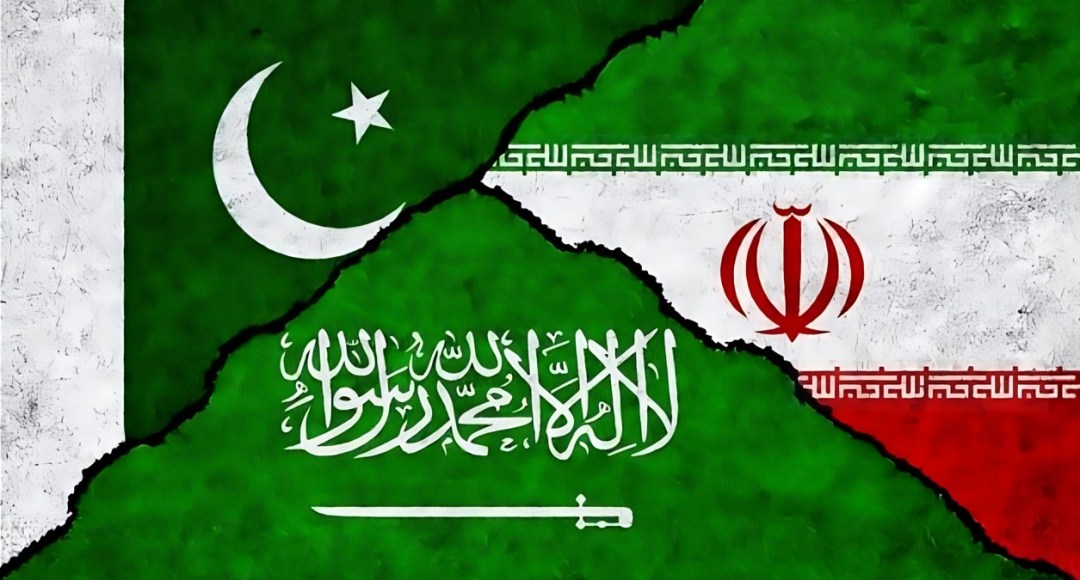
Pakistan at a Crossroads: Seizing the Opportunities of the Iran-Saudi Thaw
The recent reconciliation between Iran and Saudi Arabia represents a significant and transformative change in the region's dynamics. This unforeseen development offers Pakistan the opportunity to access new possibilities that were previously unavailable. It provides a distinct chance for Pakistan to move away from conventional alliances and adopt a fresh approach towards diplomacy and collaboration.

A Conflict Hotbed: Indus Water Treaty Jeopardized by Climate Change
Information and communication technology (ICT) has become an inseparable part of our daily lives, impacting various aspects such as business, entertainment, communication, education, and even food production. The widespread adoption of ICT, with nearly five billion mobile phones globally, signifies its global presence. Despite its almost universal reach, the advantages and opportunities provided by ICT are not equally accessible to all. Mere access to the "world information society" does not guarantee full participation and inclusion.

Beyond the Deadlock: Rethinking India-Pakistan Relations for a Prosperous South Asia
South Asia stands at a critical juncture, grappling with a multitude of challenges that hinder its progress and potential. Three prominent factors contribute to the complexities faced by the region. Foremost among them is the long-standing and highly significant Kashmir dispute. Both Pakistan and India recognize the complexity of the Kashmir dispute, understanding that progress in other areas cannot be achieved without resolving it first. The Pakistani mindset is deeply entrenched in the Kashmir issue, making it a major obstacle to improving relations with India. On the other hand, India uses the Kashmir argument to its advantage, invoking acts of terrorism and forcing Pakistan to defend its position. This ongoing debate has impeded a rational evaluation and hindered progress between the two neighboring South Asian countries, leading to a state of neither peace nor war. It is astonishing but true that in this modern century, a time characterized by connectivity, mutually beneficial coexistence, and interdependence among modern economies, South Asia remains the least connected region in the world. Trade between the eight member countries accounts for only two percent of their combined global trade.This book reveals Mariam’s intimate knowledge of South Asia, especially Pakistan and Afghanistan. It focuses on two of the major developments: the Shia-Sunni conflict known as ‘sectarianism’ and Islamism (including Afghan. Taliban and Pakistan-based Jihadi groups). In this book, the author attributed more importance to cultural codes and symbols than to theological discourses. For Mariam, sectarianism and Islamism are not religious reserves, they are ideologies that make use of religion as a tool rather than a faith.

Bilawal Bhutto’s India visit 2023: Significance, Gains, Impact
Editorial Team of Rationale-47 analyzes Pakistani foreign minister Bilawal Bhutto's visit to India for Shanghai Cooperation Organization CFM 2023. This article discusses the visit's significance, Pakistan's gains and impact of the visit. Read now:

Foreign Minister Bhutto at SCO Meeting in Goa: Key Takeaways and Analysis
Director Rationale-47 Abubakar Farooqui pens his observations from Pakistan's Foreign Minister Bilawal Bhutto's Goa visit in SCO CFM meeting and analyzes key takeaways from Pakistan's perspective from the visit. Read now:

KSA-Iran Detente: Is China the New Power Broker in the Middle East?
China's role in the recent re-establishment of diplomatic ties between Iran and Saudi Arabia is seen as a sign of a changing global order, according to experts. While the United States has traditionally been the dominant force in the Middle East, China's growing presence and interest in the region is altering the balance of power. The detente between Iran and Saudi Arabia, brokered by China, is seen as a positive development by many experts, as stability in the Gulf is crucial to China's economic interests. However, the reopening of embassies is only a step in the right direction, and it remains to be seen how far the detente will go.

Reimagining Diplomacy: Pakistan’s Foreign Policy 2.0 and Public Diplomacy
Pakistan's Foreign Policy needs a revamp to meet the contemporary challenges particularly in the security, economic and diplomatic spheres. Read our team's special analysis.

An In-depth Look at the Tainted Legacy of General Musharraf
Our team looks at Musharraf's Legacy as he dies at aged 79 abroad. Was his phrase Pakistan First a sincere representation of his vision for Pakistan?
 Rationale-47